A common instinct when defining a target market is to cast the net as wide as possible — to say that a product or service is for everyone. In practice, this approach tends to produce marketing that resonates with no one in particular, is more expensive to execute, and is difficult to tailor effectively. The stronger approach is to define the audience clearly, segment it, and speak directly to each group with messages that feel relevant and personal.
Segmentation, Targeting, and Positioning (STP) is a marketing framework that helps businesses communicate effectively with the most valuable segments of their target market. It is one of the most widely used models in marketing strategy and is directly applicable to businesses of every size and sector.
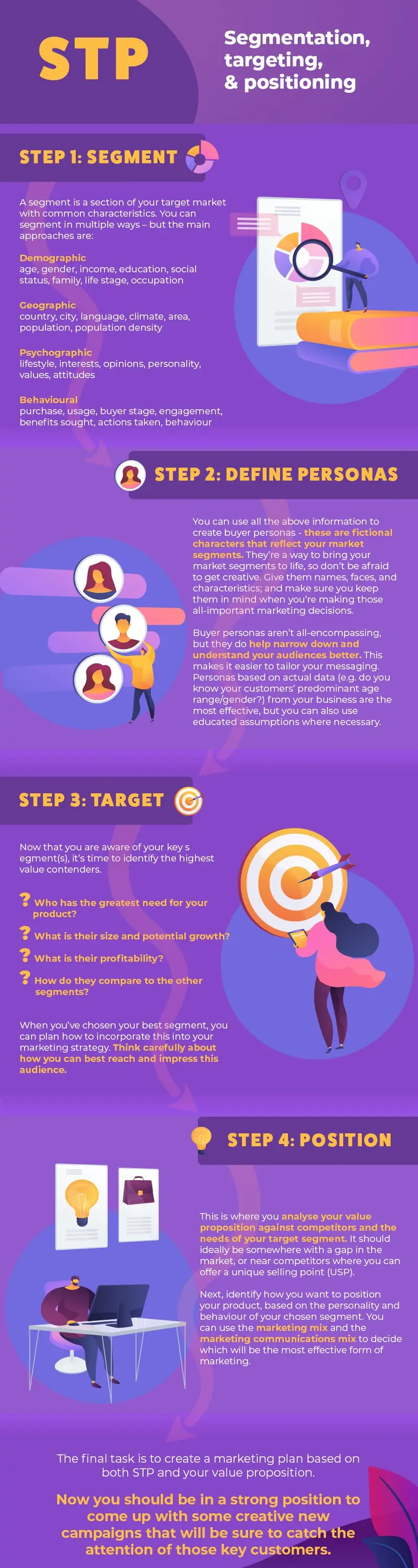
Step 1: Segment
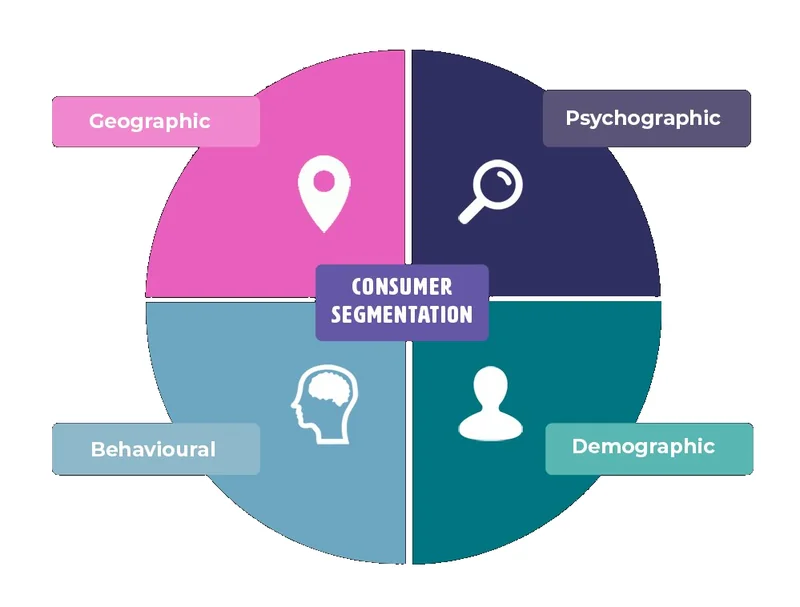
A segment is a section of a target market defined by common characteristics. Think of the entire audience base as a pie — a segment is one clearly defined slice of it. Markets can be segmented in multiple ways, but the four main approaches are:
- Demographic: age, gender, income, education, social status, family, life stage, occupation
- Geographic: country, city, language, climate, area, population, population density
- Psychographic: lifestyle, interests, opinions, personality, values, attitudes
- Behavioural: purchase history, usage, buyer stage, engagement, benefits sought, actions taken — for example, whether customers prefer to browse or purchase online or in-store
Defining Buyer Personas
The segmentation data above can be used to create buyer personas — fictional characters that represent distinct market segments. Personas are a way of bringing segments to life, making it easier to keep real human needs and preferences in mind when making marketing decisions. They should be given names, faces, and clearly defined characteristics.
Personas based on actual customer data — such as the predominant age range or purchasing behaviour of existing customers — are the most reliable. Where data is limited, educated assumptions based on market knowledge can also be used.
Persona Example
Consider an independent, environmentally conscious business called Natures Hug Organics that sells high-quality products for babies and young children. It operates a small shop in London alongside an online store.
A buyer persona for this business might be Jane — a young, middle-class parent who works part-time in Central London and lives in the outer suburbs. She actively supports small businesses, is environmentally conscious, and is willing to pay a premium for high-quality, eco-friendly products for her two young children. She prefers online shopping because it fits around her working and family commitments.
Personas do not capture every possible customer, but they help to narrow down and better understand an audience. This makes it significantly easier to tailor messaging, imagery, and tone of voice to the people most likely to respond to it.
Step 2: Target
Once the key segments have been defined, the next step is to identify which represent the highest value. Not every segment can be targeted simultaneously, so a judgement call is needed based on the following questions:
- Which segment has the greatest need for the product or service?
- What is the size of the segment and its potential for growth?
- How profitable is it likely to be?
- How does it compare to the other segments identified?
Returning to the Natures Hug Organics example: when evaluating the Jane persona as a segment, useful questions include how long she is likely to remain a customer (determined in part by the ages of her children), and the estimated spend per year per child. These factors help to determine the long-term value of the segment.
Once the best segment has been identified, a PESTLE analysis is a useful tool for identifying any external influences — social, technological, environmental, legal, economic, or political — that could have an impact on that segment or on the business's ability to reach it.
When the target segment is confirmed, it is time to plan how to reach and engage that audience effectively through the marketing strategy.
Step 3: Position
Positioning involves analysing a value proposition against both competitors and the needs of the target segment, in order to identify where the brand can establish a distinct and credible place in the market. Ideally, this is somewhere with a gap — or near competitors where a unique selling point (USP) gives a clear reason to choose this brand over others.
The next step is to determine how to position the product based on the personality and behaviour of the chosen segment. The marketing mix and the marketing communications mix are both useful frameworks for deciding which channels and approaches will be most effective.
The final task is to build a marketing plan based on the STP analysis and the value proposition. Returning to the example: Natures Hug Organics, having identified Jane's segment as its primary target, would benefit from building campaigns around its sustainable practices, eco-friendly materials, and recycling procedures — directly addressing the values that define that segment.
The STP Framework at a Glance
- Step 1 — Segment: divide customers into groups based on common characteristics and needs
- Step 2 — Target: identify the most valuable segment to focus on
- Step 3 — Position: develop a value proposition and marketing approach that engages that segment effectively
How Professional Academy Supports Your Journey
STP and many other core marketing theories are taught across Professional Academy's CIM marketing qualifications. Learners are supported by experienced tutors and receive practical, interactive learning materials designed to bring marketing theory to life.
Watch the Professional Academy recording on Segmentation, Targeting, Positioning and the Customer Persona for a detailed walkthrough of each step and guidance on developing effective personas:
For the full Strategic Marketing Theories Explained video series, visit the Professional Academy YouTube playlist.
To find the right qualification for your current level and goals, use the Qualifications Navigator or book a call with the Professional Academy team.
If you would like help referencing this blog, visit the Harvard Referencing guide.







