Studying from home offers genuine flexibility — the ability to fit learning around work, family commitments, and personal routines without the constraints of fixed classroom schedules. However, the home environment also presents real challenges. Distractions are plentiful, the boundaries between work, study, and personal time can blur easily, and motivation can be harder to maintain without the structure of a physical learning environment.
The following five tips are practical and straightforward. Applied consistently, they can make a significant difference to the quality and productivity of a home study session.
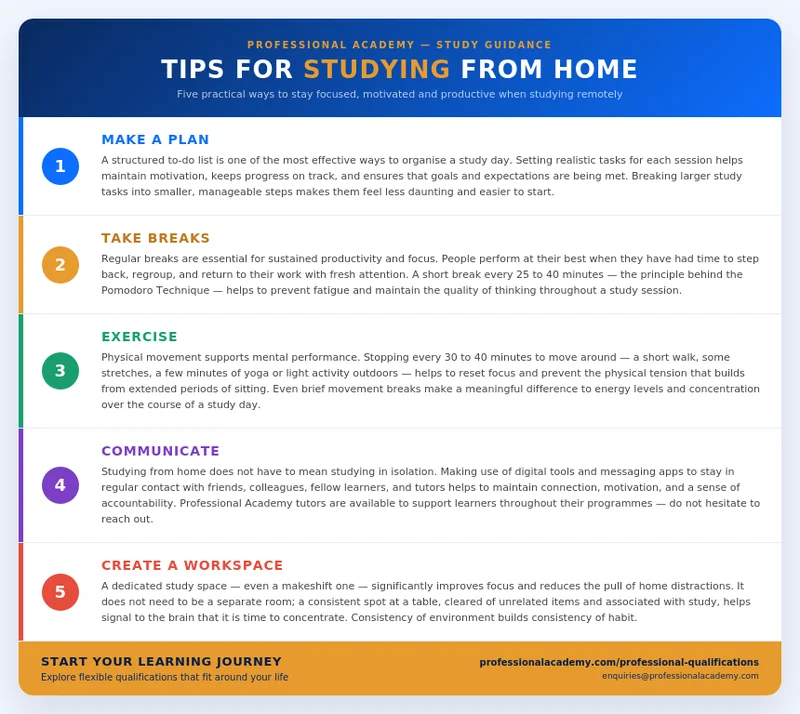
1. Make a Plan
A structured to-do list is one of the most effective tools for managing a study day at home. Without the natural rhythm of a classroom or study group, it is easy to lose track of time or allow lower-priority tasks to crowd out the important ones. Setting out a clear list of what needs to be accomplished in each session — broken into realistic, manageable tasks — provides both direction and a sense of progress as items are completed.
Planning also reduces the mental friction of starting. Knowing exactly what the first task is makes it significantly easier to begin, and beginning is often the hardest part of any study session.
2. Take Regular Breaks
Sustained concentration without rest is counterproductive. Productivity and focus decline over time when the mind is not given the opportunity to recover, and the quality of thinking that matters most for study — analysis, retention, application — deteriorates as fatigue increases.
Building regular breaks into a study schedule — a short pause every 25 to 40 minutes — helps to maintain the quality of attention across longer sessions. The Pomodoro Technique, which structures work into 25-minute focused intervals separated by 5-minute breaks, is a widely used and effective approach. The key is to make breaks deliberate and time-limited, rather than allowing them to drift into extended distractions.
3. Move Regularly
Physical movement supports mental performance. Stopping every 30 to 40 minutes to move — a short walk, some stretches, a few minutes of yoga or light activity — helps to reset focus, release physical tension from extended sitting, and return to study with renewed energy and clarity. Even brief movement breaks make a meaningful difference to concentration and energy levels across the course of a full study day.
4. Stay in Communication
Studying from home does not need to mean studying in isolation. Making regular use of digital tools and messaging apps to stay in contact with fellow learners, tutors, and colleagues maintains a sense of connection and accountability that can be genuinely motivating.
Professional Academy's tutors are available to support learners throughout their programmes — whether through scheduled sessions, online forums, or direct contact. Reaching out with questions or for guidance is always encouraged and is one of the most effective ways to maintain momentum through a qualification.
5. Create a Dedicated Study Space
A dedicated study space — even a makeshift one — significantly improves focus and reduces the pull of home distractions. It does not need to be a separate room; a consistent spot at a table, cleared of unrelated items and associated in the mind with study, is sufficient. The act of sitting down in that space begins to signal to the brain that it is time to concentrate.
Consistency of environment builds consistency of habit. Over time, returning to the same study space at the same time creates a reliable mental cue for focused work that makes starting each session easier.
How Professional Academy Supports Your Journey
Professional Academy's qualifications are designed to fit around the demands of working life, with flexible blended learning delivery that makes studying from home a practical and effective option for learners at every level. From the CIM Level 3 Foundation Certificate through to the CIM Level 7 Marketing Leadership Programme, and from ISP sales qualifications to CMI management programmes, there is a pathway to suit every starting point and goal.
Use the Qualifications Navigator to find the right fit, or book a call with the Professional Academy team to discuss the options.







